


Every antler we sell was found on the ground by a person who walked out and looked for it. Here is how that actually works.
Shed season
Bulls and bucks drop their antlers in late winter and early spring. Older animals usually shed first, younger ones a few weeks later. It happens every year, to every antlered animal, whether anyone picks the antlers up or not.
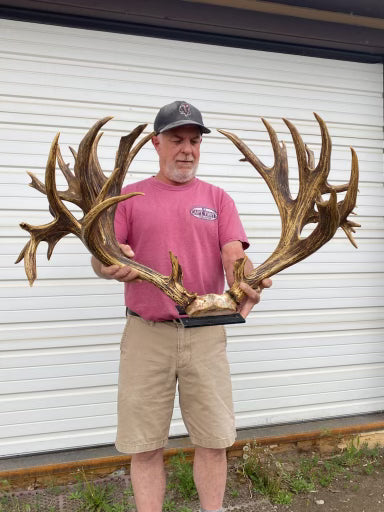
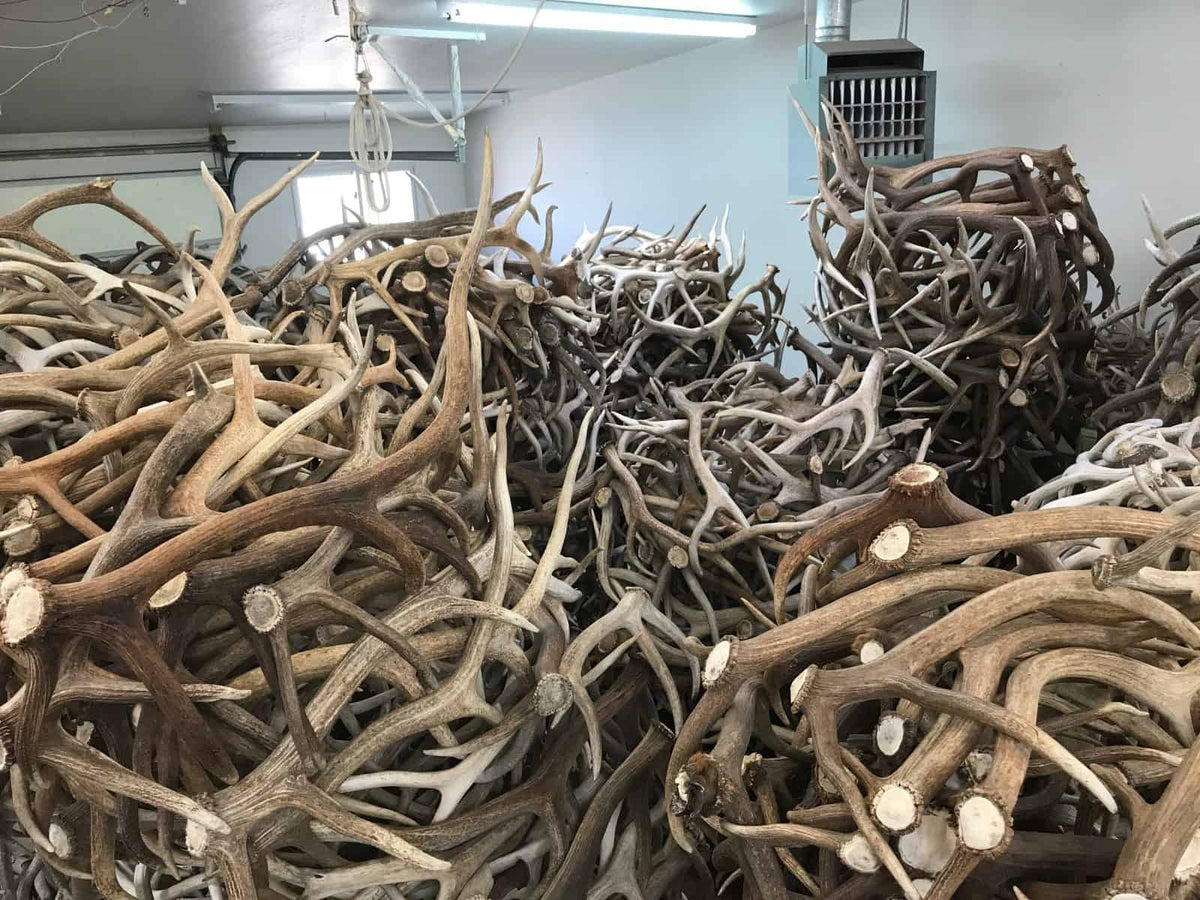
When the antler drops, the burr — the knobbed base that connected it to the skull — stays intact on the antler. That burr is how you know an antler was shed rather than taken. You can see them on the antler across this site.
The collectors
Shed hunting is a real pursuit. Collectors hike a great many miles across public land and ranch ground through the spring, covering the areas where elk and deer winter, looking for what dropped.
For some it is income. For others it is the reason to be out there at all. Either way they end the season with what they found, and they sell it to antler buyers.
Where we come in
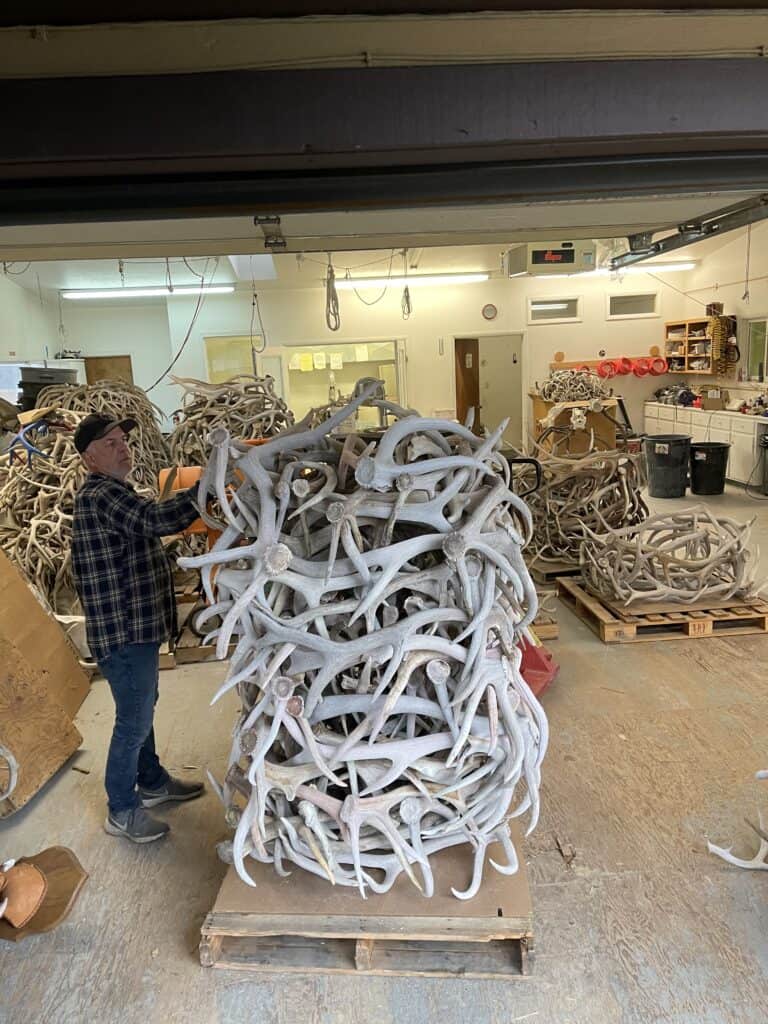
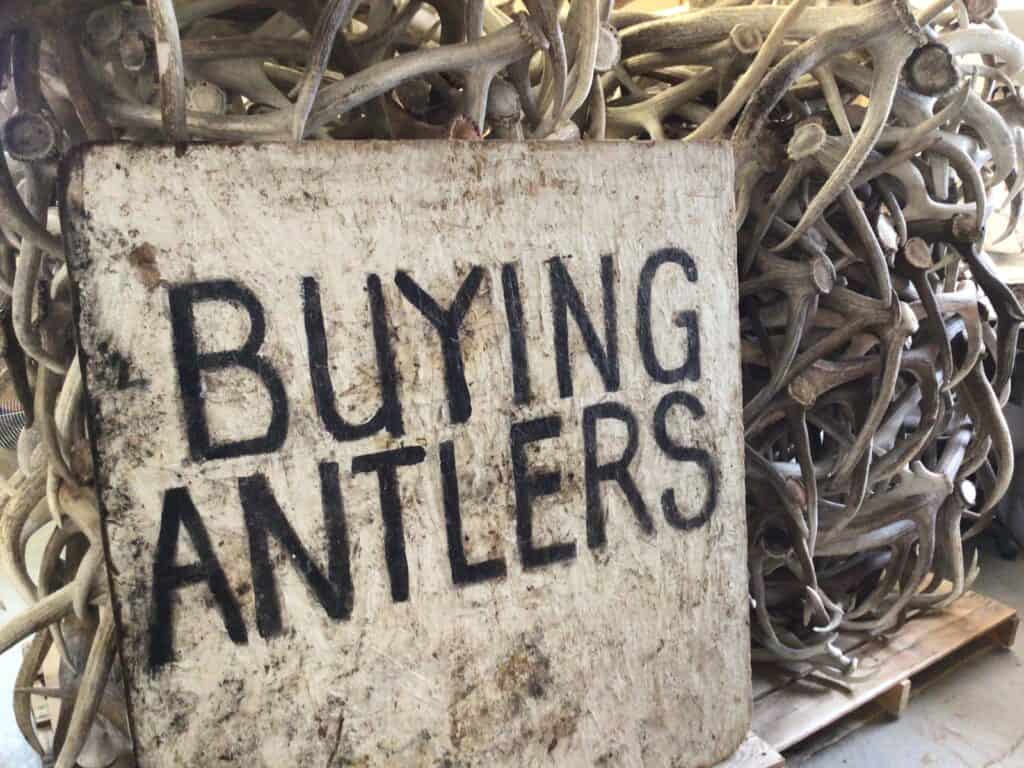
Tony is one of those buyers, and has been for decades — his father before him since the late 1970s. He travels the western states and the Rocky Mountains every year, buying thousands of pounds directly from the people who found it.
Buying direct matters for two reasons.
Freshness. We know when what we are buying came off the animal. That lets us cut only current-season shed, which is dramatically tougher than antler that has been weathering on the ground or sitting in a warehouse for years.
Relationship. Forty years of buying from the same people means we get shown the good material first. That is not something a new buyer can shortcut.
What happens next
Antler comes back to us and gets stored indoors, out of the weather, because exposure is what degrades it. Then it is graded by weight, cut to size, and that is it.
No additives. No chemicals. No coloring. No modifications of any kind. It is left in 100% all-natural bone state and shipped to you or handed across the table at a market.
Why fresh shed is safer
The newer the shed, the tougher the antler and the harder it is for a dog to break, crumble or splinter. An antler shed in the last couple of years is so tough a grown adult can stand on it without it giving.
That toughness is a safety feature, not a selling point. It is the difference between a chew that wears down gradually and one that fractures.
The sustainability part
Nothing dies for this. The animal grows a new set every year. The antler was going to drop and be gnawed on by rodents and squirrels regardless. Collecting it and cutting it for dogs is about as low-impact as a natural chew gets.
Ground to shelf
Four steps. Two of them are ours.
Most antler on a pet-store shelf changed hands four or five times before it got there, and usually crossed an ocean. Nobody in that chain ever saw the animal's range.
Ours goes: collector, us, you.


Receipts
The parts nobody photographs
If a brand cannot show you this, ask why.
Fair questions
Ask us anything about where it came from
How do I know it was really shed and not taken?
Look at the base. A shed antler has a burr - the knobbed ring where it separated from the skull - and the separation surface is porous and slightly concave. An antler cut off a skull has a flat saw line. Our whole and burr cuts keep the burr intact precisely so you can check.
Why does fresh shed matter so much?
Antler left on the ground for years bleaches, dries out and goes chalky. It splinters far more easily and there is little marrow left worth eating. Fresh shed is dense and tough - an antler shed in the last couple of years is hard enough for an adult to stand on.
Is any of it imported?
No. Ours comes from the mountain west of the United States, bought directly from the people who collected it.
Is anything added to it?
Nothing. No bleach, no dye, no smoke, no flavoring, no preservative. Color and smell vary naturally between antlers because they came off different animals in different country - that variation is the proof it is real.
Buy it from the people who cut it
Shop the antler line
Every antler is the same bone. The difference is how we cut it, and how hard your dog has to work to reach the marrow.


